

Missing Dental Supplies and What They're Really Telling You
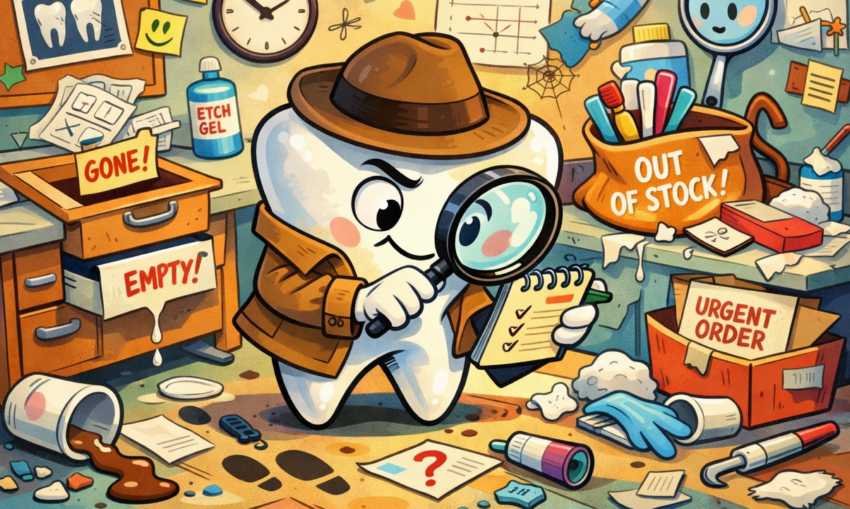 A disappearing pack of cotton rolls has a special talent: it can turn a calm operatory into a tiny mystery novel with side quests. Someone swears they stocked them this morning. Someone else swears they used the last one yesterday. Meanwhile, the patient is reclined, the mirror is fogging, and the room's collective confidence is doing a slow leak.
When supplies go missing or get urgently reordered, it's easy to treat it as a simple problem: "We need more stuff." But repeat shortages are rarely about quantity alone. Inventory gaps often act like a smoke alarm—annoying, loud, and frequently right. They can point to friction in operatory setup, unclear roles, inconsistent ordering habits, or training that happened once… three team members ago.
This isn't about turning a dental practice into a warehouse. It's about using the everyday "Where did it go?" moments as clues to make work smoother, patients happier, and everyone less likely to rummage through drawers like they're searching for a lost contact lens.
What "Missing" Usually Means in Real Life
"Missing" doesn't always mean "gone." In dental settings, it often means "not where the person who needs it expects it to be." That difference matters because it shifts the fix from buying more to building consistency.Common flavors of "missing" include:
- Misplaced: It exists, but it migrated to a different drawer, room, or alternate reality known as "under the counter."
- Substituted: Someone used a workaround item and didn't restock the original (because the schedule was sprinting).
- Uncounted: It was used, but not logged or removed from a par list, so the reorder trigger never triggered.
- Locked in someone's system: A clinician has a preferred stash location that nobody else knows about.
Operatory Setup as a Diagnostic Tool
Serious tone for a moment: setup inconsistency costs clinical time, increases stress, and can compromise quality. If two operatories are arranged differently, "missing supplies" becomes an everyday expectation. That's not a people problem; it's a systems problem.A simple test: pick one commonly missing item—say, hemostatic agent, articulating paper, or impression material tips. Ask three different team members to retrieve it from two different rooms. If the answers involve gestures, vague directions, or "it depends," the layout is teaching variability.
Standardization doesn't mean identical clinician preferences can't exist. It means there's a baseline: the same category in the same general location, clearly labeled, with a predictable backup spot. When the baseline exists, preferences become an add-on instead of a scavenger hunt.
Practical moves that help without turning the practice into a labeling contest:
- Create a "ready-for-procedure" checklist for each operatory (short, laminated, actually used).
- Group supplies by workflow stage (setup, procedure, cleanup) rather than by vendor or packaging shape.
- Assign one "home location" per item and one "overflow location," and make both obvious.
Urgent Reorders Are a Symptom, Not a Strategy
Rush ordering feels productive. Something is wrong, a button is clicked, a box arrives. Relief! Then it happens again next week, and the practice slowly becomes a museum of partially used supplies.Frequent urgent reorders usually point to one of three root causes:
- Par levels don't match reality: The minimum stock is based on guesses, old procedure mix, or optimistic assumptions about "how long a box lasts."
- Reorder points aren't owned: Everyone can reorder, so no one is really responsible for preventing shortages.
- Usage isn't visible: Items leave the shelf without any simple signal that they're trending low.
A lightweight approach: choose 10 high-impact items (the ones that cause the biggest disruption when missing). Track them weekly for one month: starting quantity, ending quantity, and any "we ran out" moments. You'll quickly see which items need higher par levels, which are being used in unexpected procedures, and which are disappearing into the black hole of "miscellaneous."
Staff Training Gaps That Show Up as Inventory Problems
Sometimes missing supplies are a training signal wearing an inventory costume. If newer team members don't know where items live, how to restock, or what "good" looks like for an operatory reset, they'll improvise. Improvisation is creative in art; in clinical flow, it's expensive.A clear training pattern helps:
- Teach the "why," not just the "where" (why this item lives here, why counts matter, why substitutes need replacement).
- Use a short shadowing checklist for restocking and room turnover.
- Make one person the go-to for inventory questions during onboarding—so confusion doesn't become a permanent feature.
Turning Frustration Into Useful Signals
Not every inventory hiccup deserves a full investigation. One missing item during a chaotic morning doesn't mean the system is broken. Patterns, however, are generous with information. When the same supplies keep vanishing, arriving late, or appearing in duplicate orders, the practice is being handed data—just not in spreadsheet form.A useful habit is to capture these moments without dramatizing them. A simple shared log works: date, item, operatory, and what happened. No blame, no commentary. After a few weeks, trends start to surface. One room runs out more than others. One shift struggles more than the rest. One category of supplies causes disproportionate disruption.
This approach changes the tone from "Who forgot to order?" to "What is this system teaching people to do?" That shift alone reduces defensiveness and makes real fixes possible.
When Inventory Issues Affect the Patient Experience
Here's the serious part again. Patients notice delays, even when they don't know the cause. A clinician leaving the room twice to hunt for an item doesn't inspire confidence, no matter how friendly the conversation is on return. Repeated interruptions can subtly erode trust and increase appointment times.Inventory gaps can also force substitutions that aren't ideal. Using a backup material because the preferred one ran out may be clinically acceptable, but it introduces variability. Variability increases cognitive load, and cognitive load increases errors.
Reliable supply flow supports consistent care. It protects appointment timing, reduces chairside stress, and allows clinicians to focus fully on the procedure instead of mental inventory math.
Small Adjustments That Pay Off Quietly
The most effective changes tend to be unglamorous. They don't announce themselves. They just make the day feel easier.Examples that often work well:
- Color-coded labels for high-use items so they're visible at a glance.
- Clear "open box" versus "backup box" separation to prevent accidental hoarding.
- A weekly five-minute inventory walk-through instead of monthly deep dives.
- One designated person to approve changes to supply locations.
No More Guesswork Just Better Flow
Missing dental supplies are rarely the real problem. They're messengers. Sometimes annoying ones, sometimes persistent ones, but useful all the same. Each gap points toward an opportunity to simplify, clarify, or standardize something that has slowly drifted off course.When a practice treats inventory issues as signals instead of failures, the response changes. The team stops reacting and starts diagnosing. The operatory becomes more predictable. Orders become calmer. And the question "Where did it go?" gradually fades from daily conversation—replaced by something far more valuable: quiet, uninterrupted momentum.
Article kindly provided by zenone.com
Latest Articles
- Could Your Home's Plumbing Be Affecting Your Health Without You Realising?
- Toothache: When to Monitor, Call Soon or Seek Urgent Dental Care
- Your Donor Hair Is a Finite Resource: Why Hair Restoration Needs a Long-Term Budget
- Why Your Fitness Routine Needs More Easy Days, Not More Hard Ones
- The Hidden Hair Loss Triggers Most People Never Think About
- The Mouth-Body Connection Most People Ignore
- The Psychology of Texture in Wellness Photography
- When DIY Beauty Goes Too Far: Treatments Better Left to Professionals
- The Hidden Link Between Jaw Tension and Everyday Headaches
- Sleep Timing Shapes Hormones More Than You Think
- How Subconscious Habits Affect Your Skin Health
- Fragrance Fatigue Is Real: How Smaller Bottles Help Your Nose Stay Sharp
- Traveling with a Baby: Smart Packing Strategies for Modern Parents
- How Oral Health Quietly Influences Energy Sleep and Long Term Well Being
- How Emotions Affect Your Skin
- Everyday Walks as Brain Games for Your Dog
- How Light Weights Can Build Serious Strength
- Missing Dental Supplies and What They're Really Telling You
- Rethinking Early Intervention Strategies for Childhood Behavior Support
- Keep Going: The Brain Science of Turning Setbacks Into Momentum
- Nutrition and Dietetics
- Exercise and Fitness
- Meditation and Yoga
- Mental Health
- Women's Health
- Men's Health
- Children's Health
- Senior Health
- Heart Health
- Sleep Health
- Skin Health
- Eye Health
- Dental Health
- Pain Management
- Addiction and Recovery
- Sexual and Reproductive Health
- Alternative Medicine
- Chronic Conditions
- Weight Management
- Occupational Health and Safety
- Public Health
- General Health Tips
- Beauty